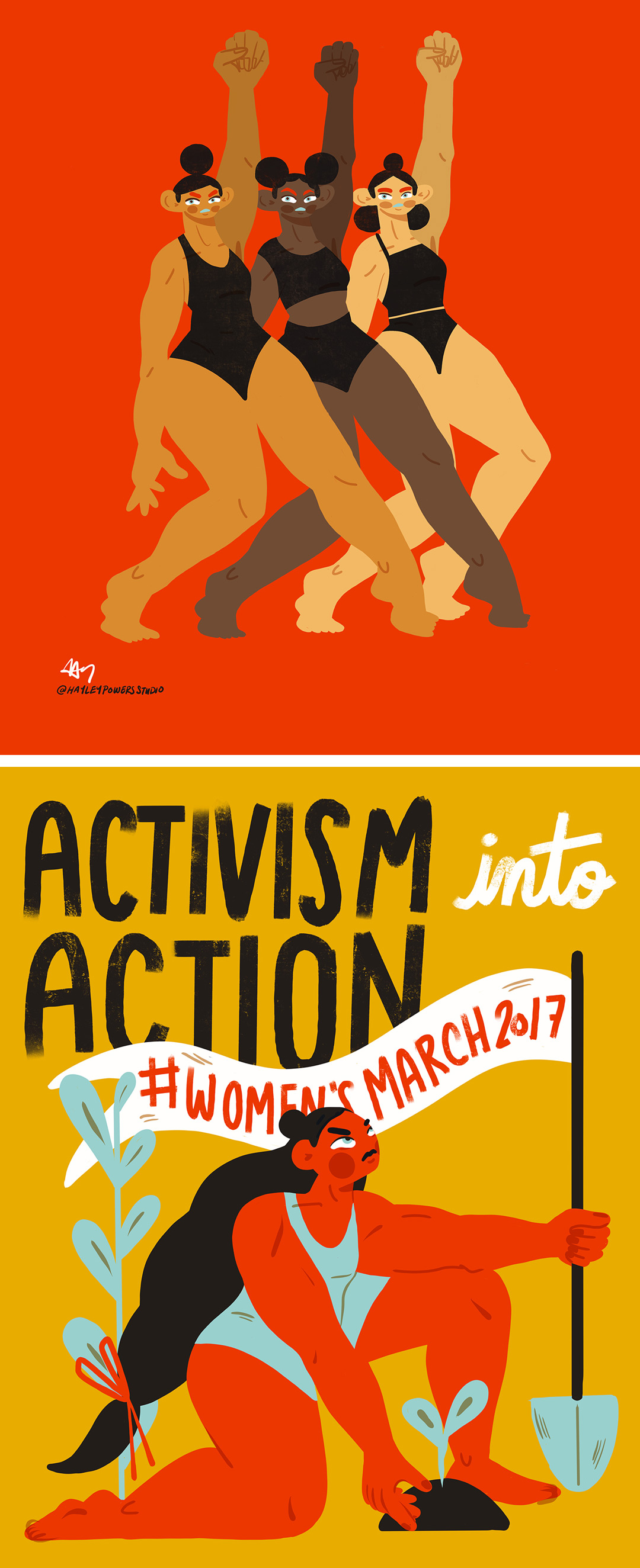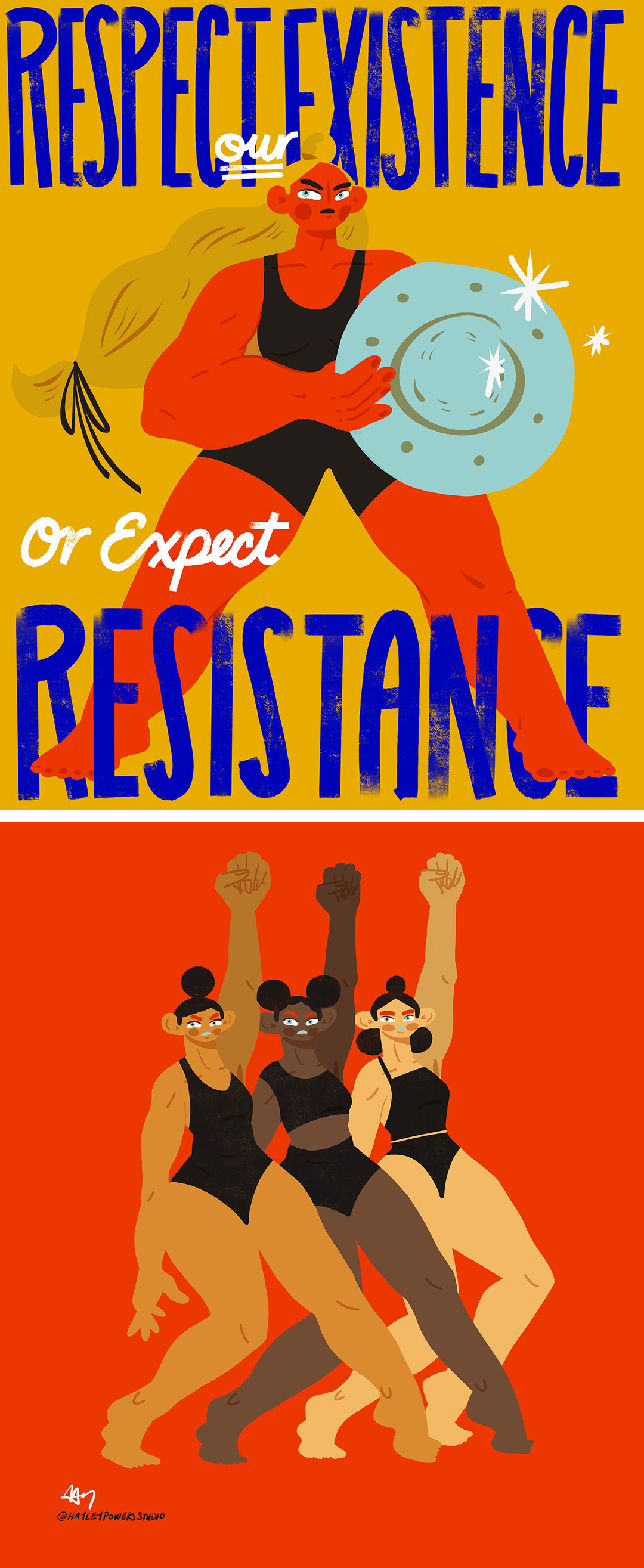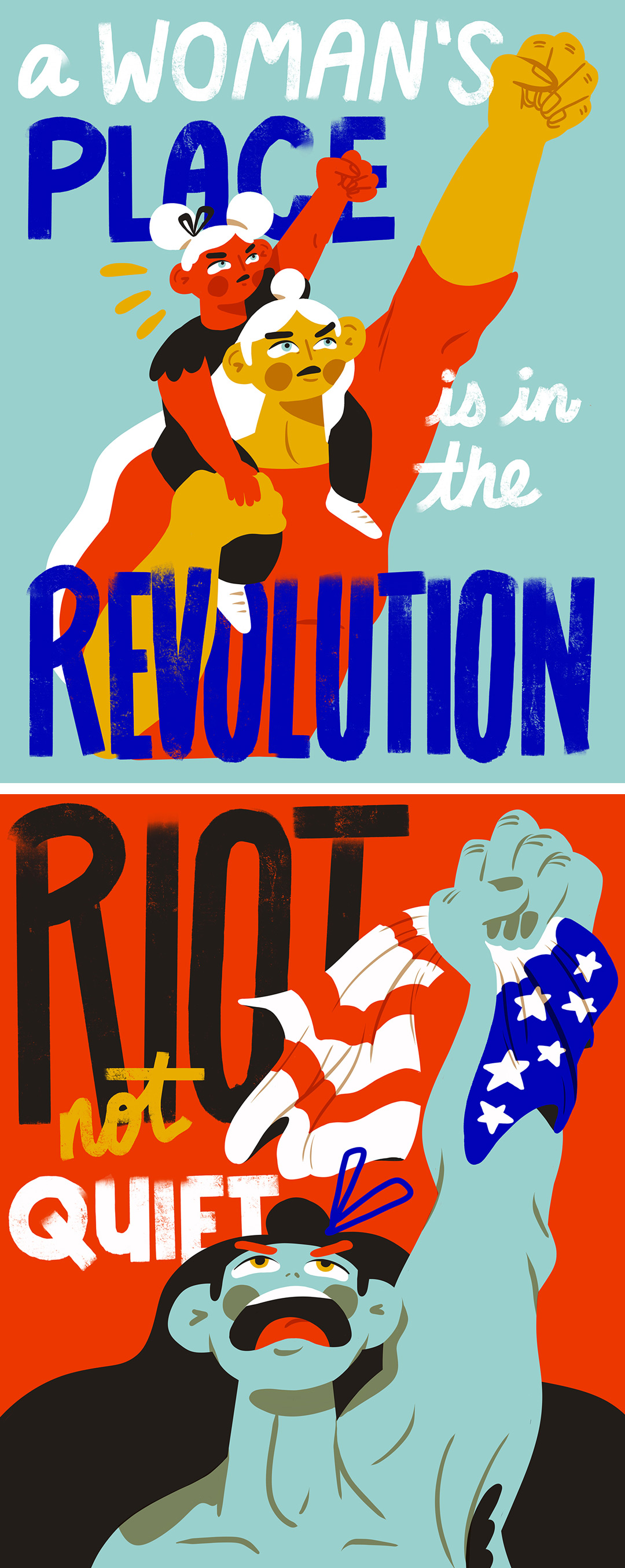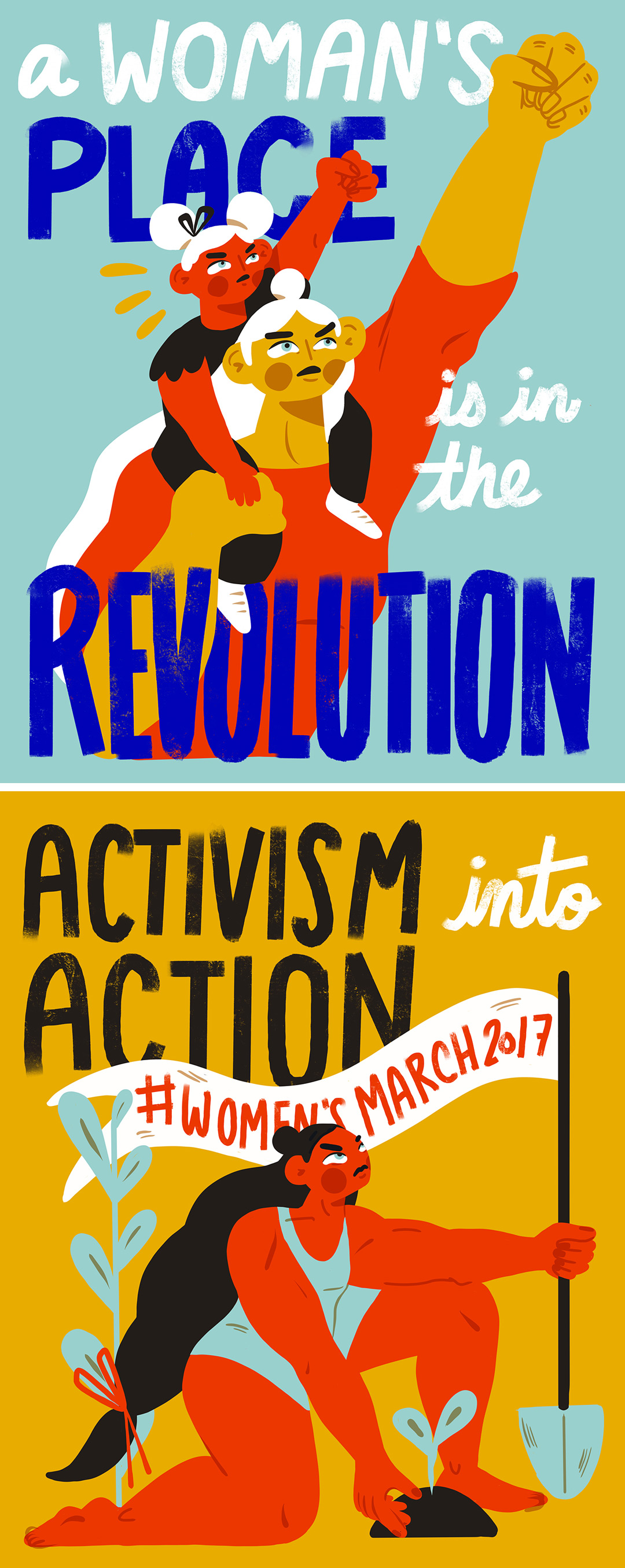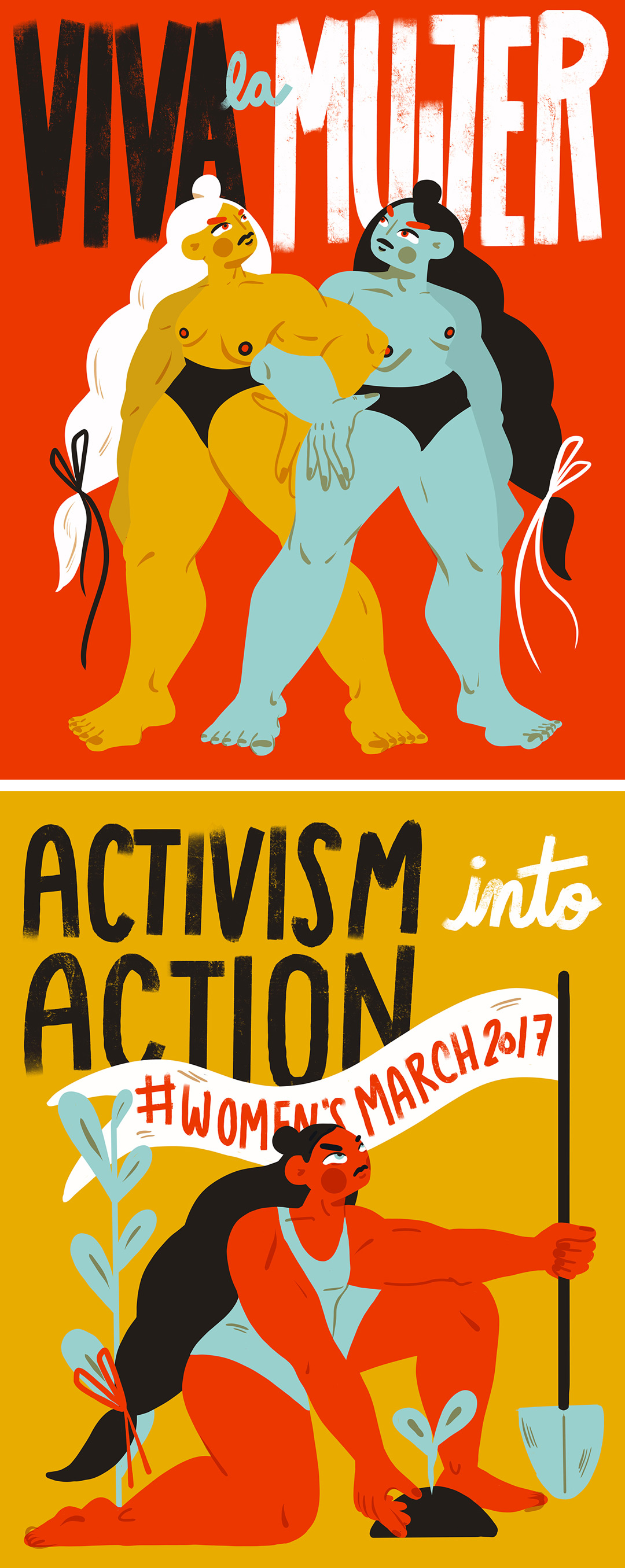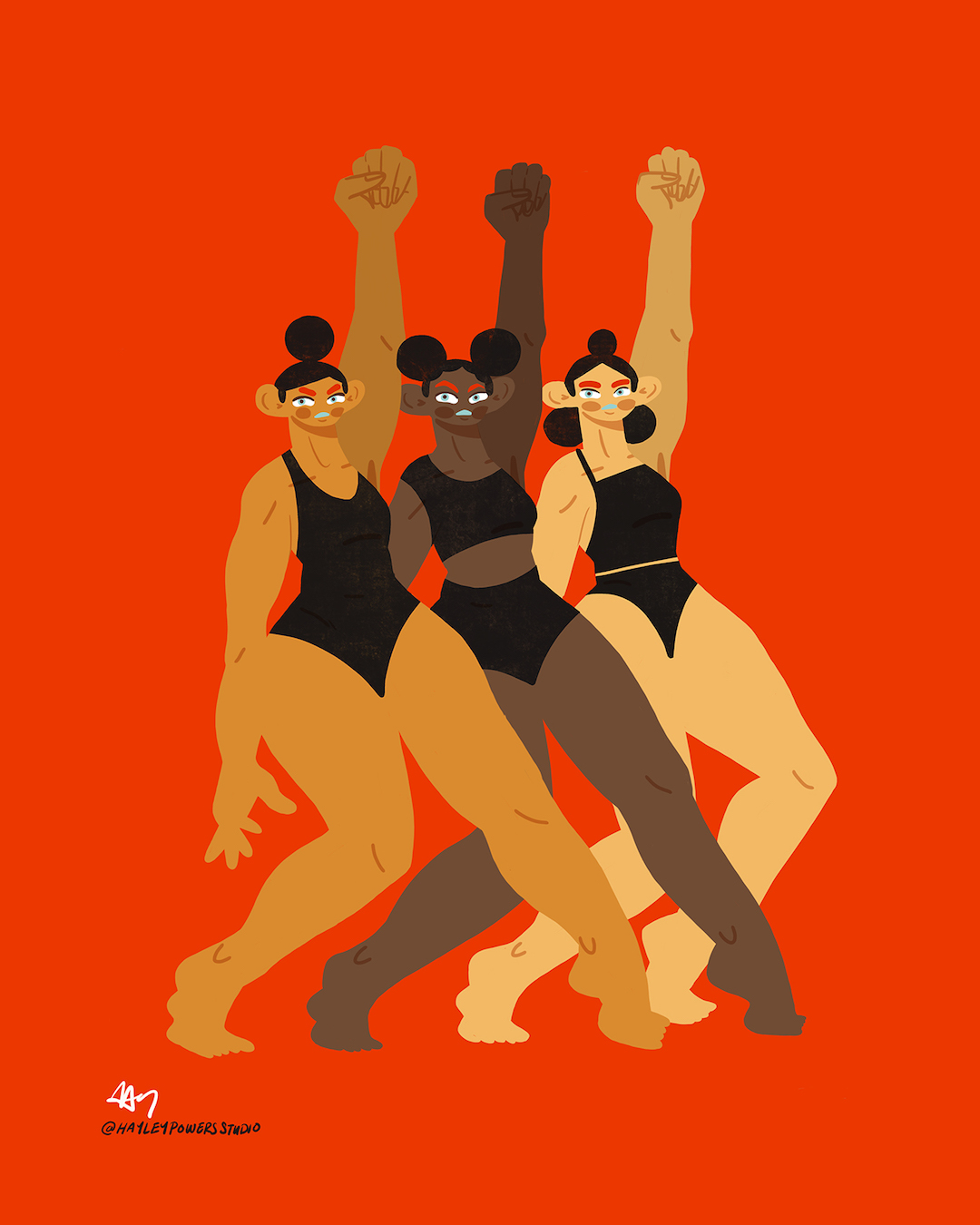
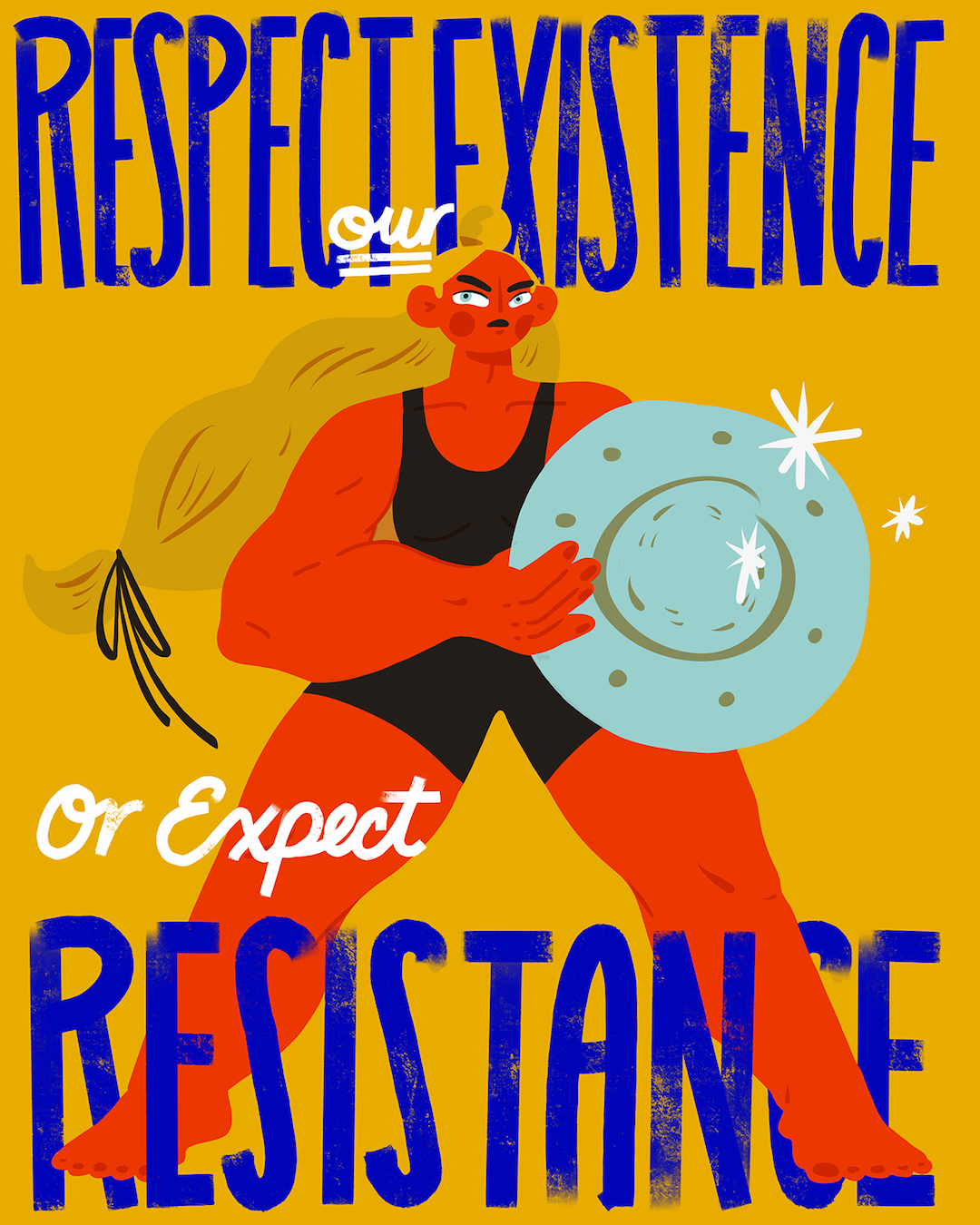
I first met Hayley Powers Thornton-Kennedy when I visited the MFA Illustration Practice program (MFA ILP) as a guest critic and lecturer. In their cozy, well-lit studio, she showed me a selection of signage she had created for the Women’s March on January 21. I was instantly attracted to the bold illustrations and, above all, imagery featuring strong female figures. I had the opportunity to talk to Hayley more about her work, both in person and via email. The conversation and her illustrations seem especially fitting for today’s International Women’s Day and A Day Without Women.
Hayley hails from the West Coast but made her way East for college. After graduating, she worked many different types of jobs. (We both lamented how we graduated in 2008, the height of The Great Recession, and how much that sucked.) Hayley did, however, make her way into the design world. Although she recently switched gears into illustration, there’s an underlying theme to Hayley’s work, and that’s creative problem solving. What’s the best way articulate your message? For Hayley, it’s imagery that features bold colors and inclusive subject matter. It’s also about accessibility. For the Women’s March, her signs were (and still are) available for download, free of charge.
Illustration is intimately tied to our culture. It’s something that’s easy to forget, because it encompasses a lot, from the design printed on your coffee sleeve to a thought-provoking New Yorker cover. Illustration is a savior in difficult times and says what words cannot. During the Paris attacks of 2015, Jean Jullien’s Peace for Paris became an instant symbol of the tragedy. But just as important, illustration is also a form of dissent. In Hayley’s case, it’s a call to arms to resist the Trump administration and all its hate and fear mongering. Remember, illustration is a vehicle for social change, in addition to being something that’s printed on your favorite t-shirt.
Read my interview with Hayley, below. And be sure to follow her work on Instagram. She’s always posting great stuff.
Obviously, I met you in the context of MFA ILP, so you’re in deep with illustration at the moment. What was your life like before the program? I saw you worked in web design. How has that shaped your illustration?
Before I applied to MICA I had been working as a web designer primarily, while also taking on other design projects involving branding, logo design, etc. I was a freelancer, and I attracted clients who wanted to see colorful, playful work. I liked to draw in my spare time and had started to sneak illustration into my client work whenever I got the chance to. I hadn’t found my style yet, so I was experimenting with different looks, and how I could integrate those styles with different clients. However the assets I was making weren’t very ‘deep’ on a creative level. Lots of flat vector icons of little laptops and office-y things.
Although my focus has shifted to illustration (which I am SO happy about) I feel like all my past creative experiences have an impact on the work I’m making now, and the work I’ll make in the future. I’m a big proponent of being a lifelong learner, so I believe that (especially as makers) our skills, ideas and influences are cumulative. Even if we move into a new medium, how we approach that work is influenced by what we’ve been exposed to and experimented with before. Recently I’ve been focusing mostly on the formal issues surrounding my illustrations like style, color, and line but my experience in the tech field is definitely informing how I’m approaching the reach of my work. I’m using social media as a way to signal boost and distribute the issues and work that is most important to me. I’m also working on more comics, and approaching sequential narratives is really similar to troubleshooting UX (user experience) on web projects. Both relate to visual storytelling by guiding the eye through an information-dense experience.


A selection of Hayley’s comic called Day nine. You can read the entire thing here.
I also that you’re the web editor for Blunderbuss Magazine. Can you talk about it and your role there and if that’s changed over the years? BTW: I read your comic that appeared on it—very powerful. Are you going to do more comics for it?
Blunderbuss is so great. It’s run by such talented, compassionate people! My role is currently in title only as my time is extremely limited. But I designed and developed the website, and did website and troubleshooting for the online magazine while I lived in Brooklyn (along with the majority of the other editors). The magazine has done a lot of growing in the few years it’s been around, and recently put out their first quarterly print issue. I did the cover illustration for that, and have been contributing to the magazine as an artist and writer more often than a code tinker-er lately. I’m glad you liked the comic! It was really just an overwhelming reaction to the speed and severity of all the terrible actions being carried out by this administration that I had to put into words and pictures. As I produce more comics I hope to continue to use Blunderbuss as a platform.
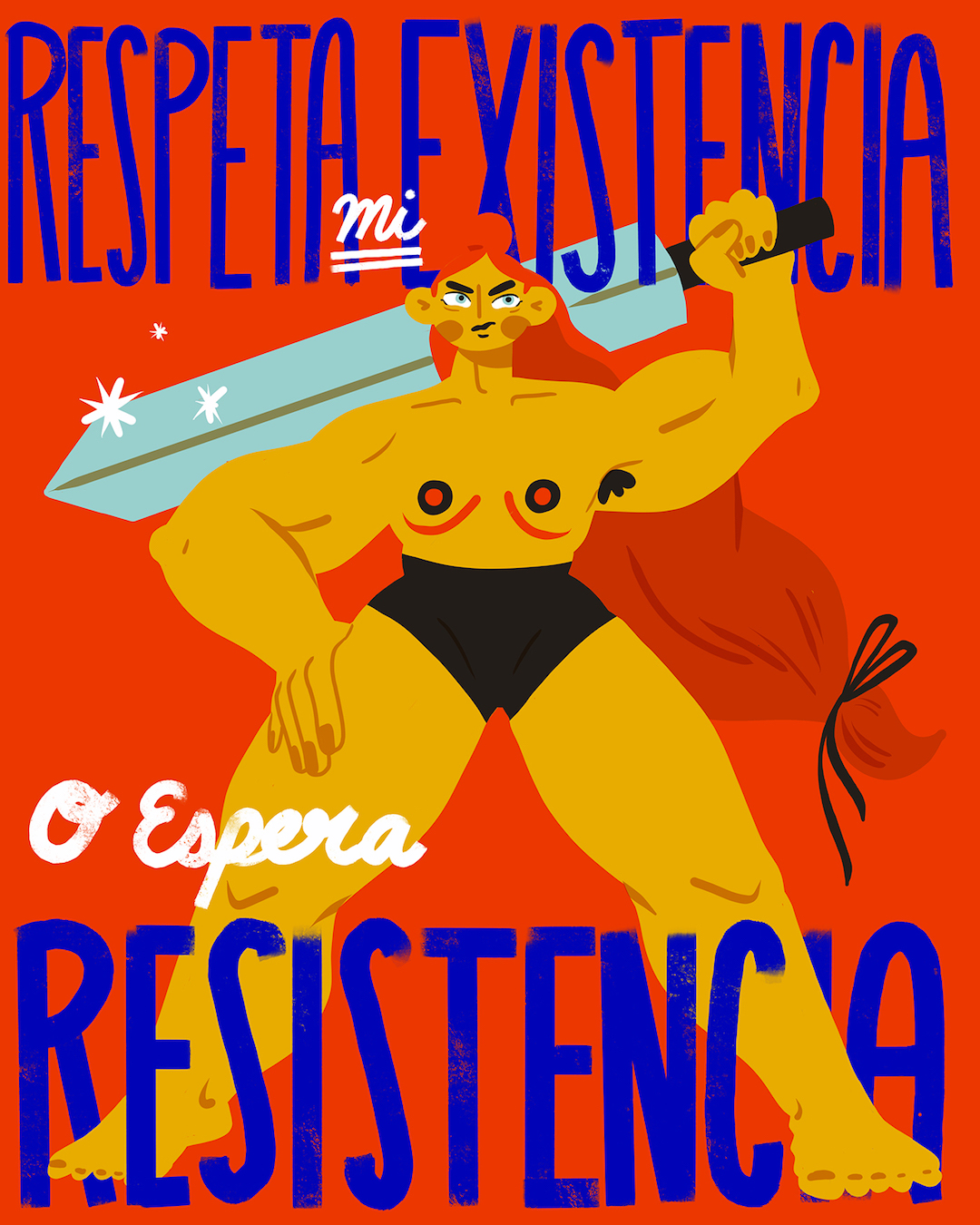
You completed the 100 day project that focused on girls girls girls! What inspired you to take on this project, and what did you learn from it? Did it inspire your Women’s March signs at all? I can see similarities between the two.
Yeah! This project actually was the beginning of the style and the subject matter that I’m pursuing now. Last summer I was getting ready to be married and was really stressed out by the expectations that the wedding industry burdens people with, particularly with the pre-packaged idea of what constitutes ‘femininity.’ I’ve always been a tomboy, and no matter how much i’ve been pressured into looking or acting a certain way, I’ll always look and feel a little boy-ish. I feel prettiest when I feel strong and confident, so I wanted to start drawing figures to reflect that.
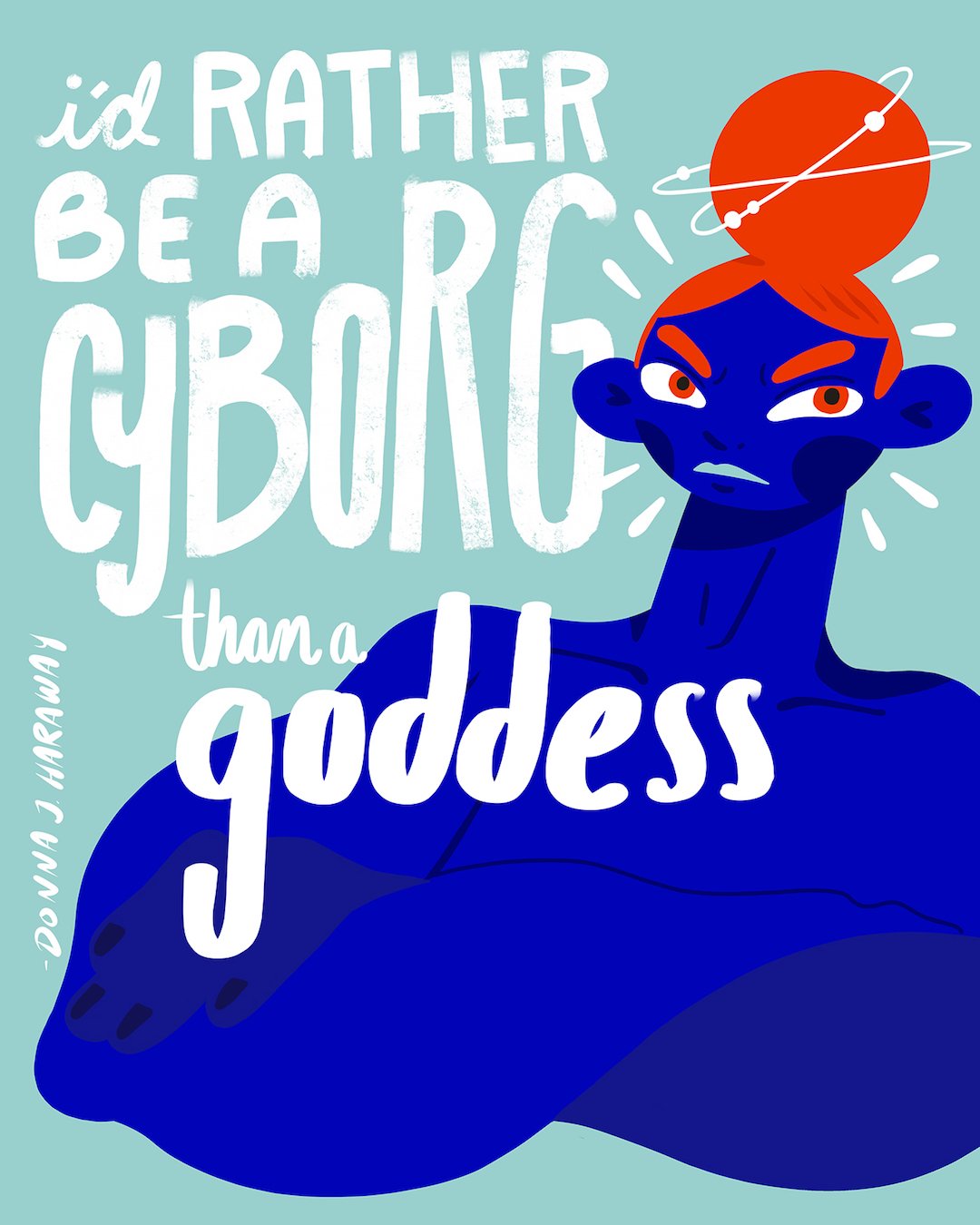
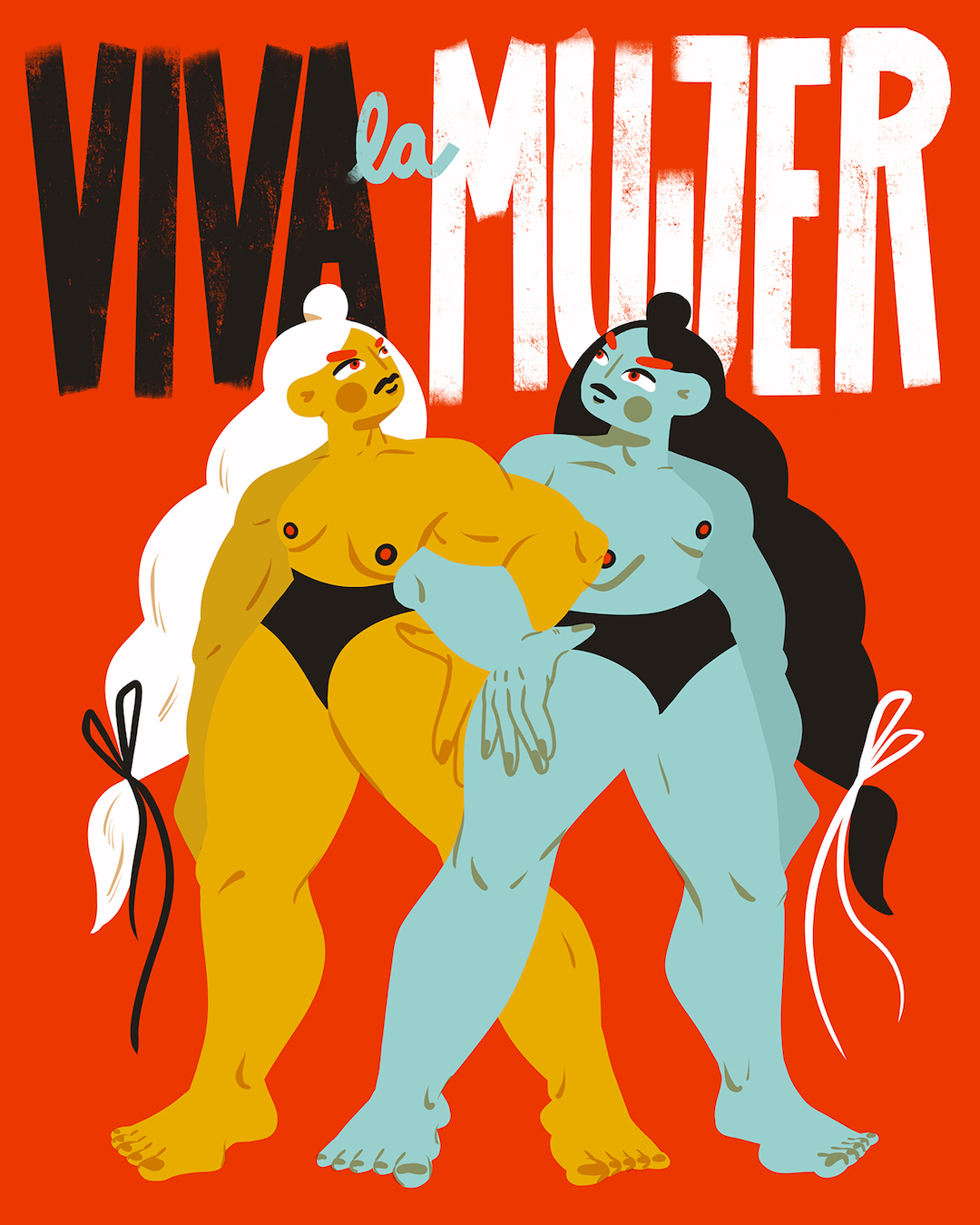
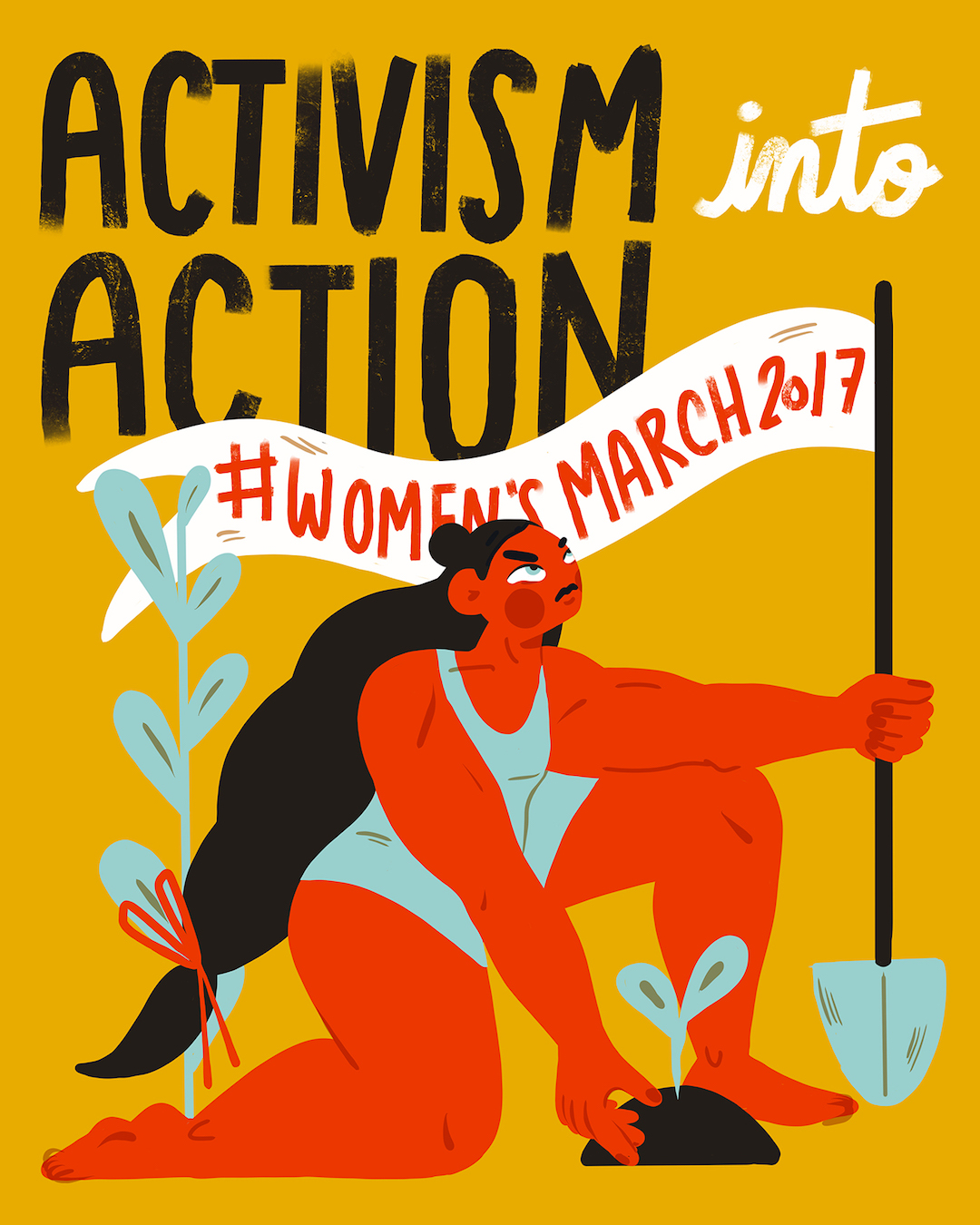
How do you define your role as an illustrator in our ever-changing world? And, how do you view illustration and activism working in tandem? Right now you’ve created a bevy of readily-available signs—where do you see it going from there? What inspired you to create the signs in the first place? Have you always viewed your illustrations to comment on the current state of affairs? If no, was this election cycle the impetus for it?
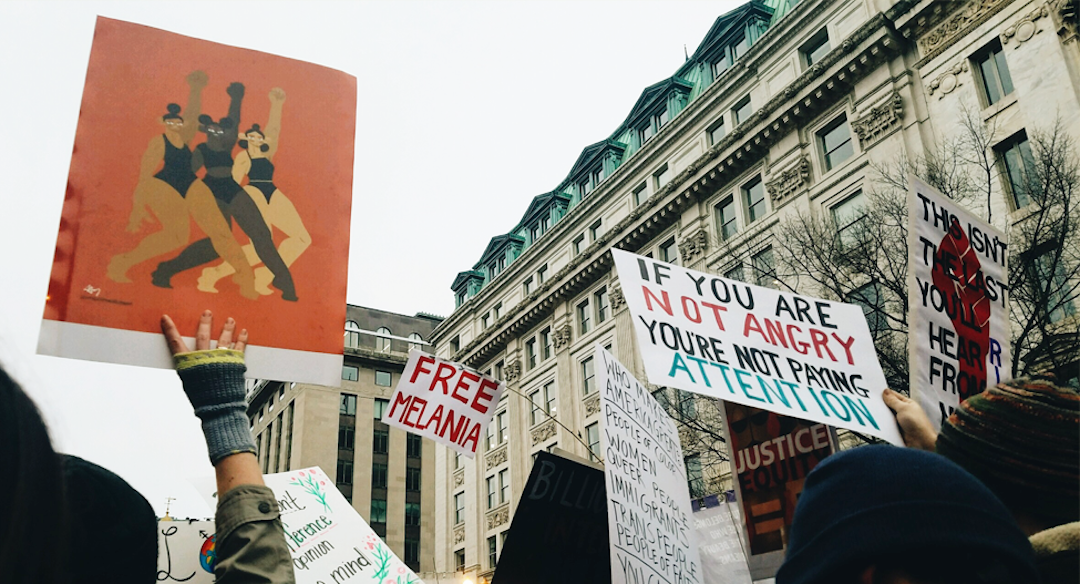
I had been planning on attending the Women’s March in Washington DC for a while, and as an illustrator I put lots of pressure on myself to have a great poster. But there were so many different things I was upset about, it was difficult to focus my messaging. So in the week leading up to the March I decided I would open 10 commission slots for free posters with an illustration and a requested slogan. I announced this on Facebook and Instagram thinking I wouldn’t even fill the commission spots, but received an overwhelming response. I drew 10 posters in 5 days, and made one poster available for anyone to download, print, and carry in the march. These posters were carried by women at marches in Los Angeles, San Diego, Chicago, Philadelphia, New York City, Washington D.C., and Barcelona. I was amazed to see the reach of my work, and was proud to be so many places at once.
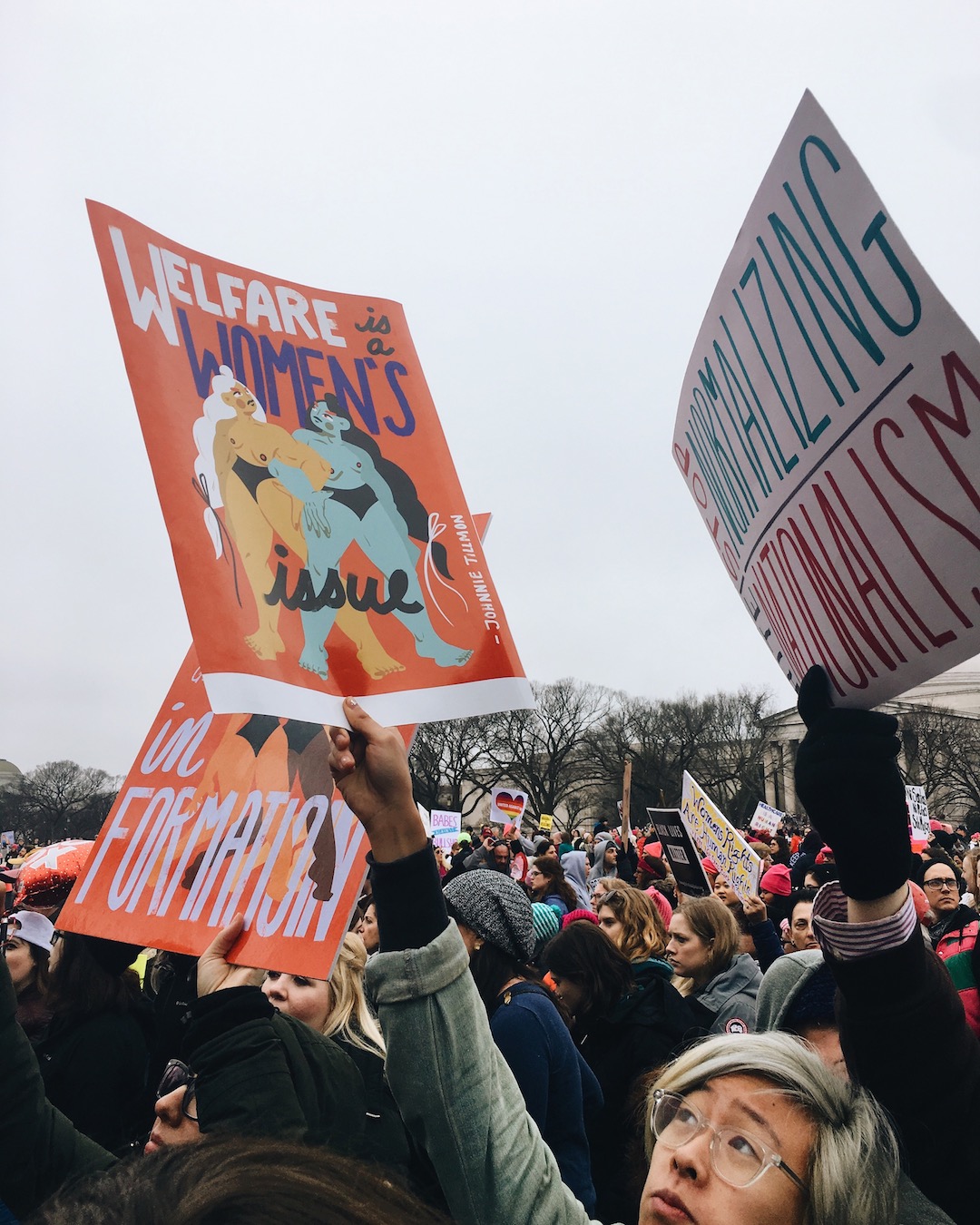
(continued) I want to maintain cultural relevance in my illustrations, and I hope my approach to feminism and the strong female figure will always be a central theme in my practice – but first and foremost I’d like to continue making work that I feel connected to. I also received tons of support and encouragement when I started to share my illustrations depicting feminism, powerful bodies, and progressive messaging, which gave me the confidence to become more political with my illustration and begin to make drawings that put my beliefs, and my rage, front and center.
The current political climate of racism, misogyny, transphobia, islamophobia ETC has definitely intensified the urgency of my work. There is so much emotion you can pack into an illustration, and now, with the reach of social media, those images can resonate with hundreds if not thousands of people in one day. A drawing may not bring about an avalanche of social change, but if it can make one woman feel stronger, less disenfranchised, or energized to engage politically, I’ll have made an impact, and that idea makes me so happy.


(continued) On the flip side of appreciating the power in the illustrated image, I want to recognize that sometimes just drawing something and posting it on social media feels like a hollow act. I’m active but I can’t call myself an activist. I think we can all look at our lives and find ways in which we can incorporate acts of resistance and activism into our day. I’m always at the studio working on schoolwork lately, which limits the time I’m able to spend on expressing my beliefs and supporting the communities most affected by the aforementioned ‘isms. So I’m trying to engage in the community I’m a part of by just being present on my morning commute.It doesn’t feel like much, but eye-contact, a smile, and saying “good morning” can go a long way in a city environment where people don’t feel connected to each other at all.
I don’t know where I’ll go next with this work specifically, but I have some ideas for zines that prompt acts of resistance and deeper political thinking (because I’m aware that my beliefs aren’t the end all be all of progressive political opinion). I’d also like to make my posters into postcards, and include a list of addresses of political offices in the pack, prompting the audience to use the cards to voice their discontent. And personally I’m interested in studying the relationship of art and activism further. I’m planning on holding a workshop at MICA soon in which we will be looking at a history of resistance art and sending letters and pieces of artwork to political offices.

Are you going to continue this path of illustration activism into your thesis year?
It’d be really great to continue this thread of activism into thesis year, and I think that my work will be stronger if I weave in my political vindications and reactions to the cultural climate into the narrative. So I don’t see myself shying away from using illustration as a tool to voice my beliefs anytime soon. And although it is subtle at times, you can be sure that every strong bicep, fierce eye, female caress, and unruly body hair that I draw is an intentional kick in the shin of the patriarchy.