
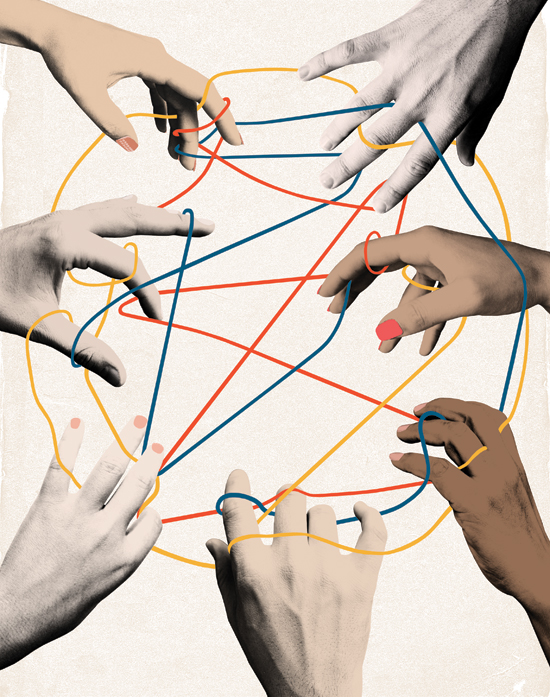
Image by Eda Akaltun.
As someone who clicks around the internet for hours at a time, I am constantly seeing cool things. My go-to sites are Pinterest and Tumblr, which offer robust amounts of inspiration. But, more often than I’d like, I see images on these sites that don’t have any name attributed to them, and no trail to lead you to who actually made the image. In this post, I wanted to give you a couple of tips for making sure that things we see online are credited to their authors. I also speak with illustrator Gemma Correll about her experience with sharing her work on the web.
Everything that we chose to share online goes out in a large ether. It’s like sending something down a creek and watching it float away. Who knows if it will get stuck on that tree branch, or gain speed and cover great distances? The same goes for creating work and posting it on the web. Maybe your tweet or Tumblr post won’t go anywhere. Or, maybe it will go viral and be passed on again and again, until it finds its way to an art director, gallery, or blogger that you were always trying to reach.
So, as an artist/illustrator/creative, it’s important that you protect yourself. Sharing is fun and social media has changed our lives, but it doesn’t come without a cost. We’ve all seen places that have stolen from illustrators to place on their wares. I’ve seen many illustrators who work gets reproduced without their permission on t-shirts, for examples. Gemma Correll of “Pugs not Drugs” fame (and so much more!), was kind enough to speak with me about her experience with plagiarism, and how she, as a wildly successful illustrator, tries to protect against it.
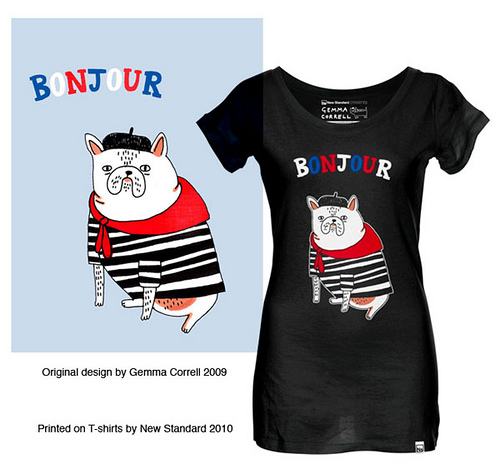
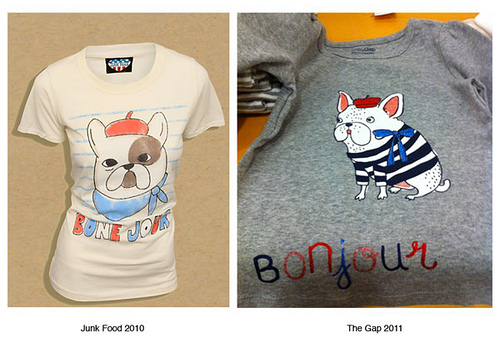
Above, work that was plagiarized from Gemma. Images via her blog.
Brown Paper Bag: Can you briefly tell us your experience with your work being plagiarized or outright stolen? Were they individuals or companies?
Gemma Correll: I’ve had experience with both. It doesn’t bother me too much with individuals, but when it’s a large company doing the thieving it’s pretty annoying. It just seems like some companies hire extremely lazy designers who can’t be bothered to think of their own ideas. I don’t know how those people get any job satisfaction. But I see large companies, particularly clothing brands, stealing fro, artists all the time. It feels like we, the ‘little people’ are doing all the work, being creative and clever and innovative, just for the corps to come in and take all the credit. I guess that’s the way it’s always been, but the Internet has made it easier.BPB: How did you find out your work had been copied or stolen? Did that make you change how you share your work or how often?GC: Most of the time, somebody has contacted me by email or social media to let me know that they’ve seen my work somewhere that – they suspect – it shouldn’t be. If it wasn’t for the Internet I’d be blissfully unaware, for better or worse, of most of the plagiarisms. It doesn’t really stop me from sharing my work. One of my favourite things is being able to share with others and hopefully entertain them. The plagiarism is getting more and more common but it’s really just a very small part of my working life, albeit an infuriating one.
BPB: What do you do to make sure your work is attributed correctly? Have you ever hired a lawyer about copyright infringement?
GC: I add my name and copyright info / website to everything I post online. That way, if it gets ‘orphaned’, at least my name is on the image, even if its not linked. Of course that doesn’t stop people deleting the info from my images (this happens quite a lot) but there’s only so much one can do.
I’ve never gone so far as to hire a lawyer. I don’t really have the time. Usually a ‘cease and desist’ letter to the plagiariser suffices but there are certain times when one has to just let it go. For example, if I see my work appearing on tshirts sold in china, I know there’s pretty much nothing I can do about it, because of china’s pretty much non existent copyright laws. So I move on, and try to keep making new and better things.BPB: What tips do you have for those worried about where their work ends up?
GC: I don’t think you should let these worries put you off sharing your work, it’s one of the great joys of the Internet, being able to create work and immediately share it with others. The best thing to do is to keep moving forward, keep making new things. Of course, you should also do your best to protect your work- put your name on everything you post online, don’t upload anything at a high resolution, use flickr as a place to upload your images where they can have creative commons licenses- but know that unfortunately, some thievery is perhaps inevitable once your work reaches a large audience. All you can really do is to stay positive and try not to let it get you down. And eat some cake. I find that cake helps immensely.
Thanks, Gemma!
If you see an image that’s not attributed to anyone or anything, it’s just going to stay that way. Reblog after reblog, Pin after Pin, an image will get lost and not properly attributed to the artist who worked hard to create it. How can you help, besides making sure everything that you post has an author and website where you found it?
I use Reverse Google Image search.
If you watch the TV show Catfish religiously (as I do), you know that Max and Nev always reverse Google Image Search to find out if an image is stolen. The way this search tool works is that it looks for images that are identical or similar to it. Often times, if you take the time to copy and paste the image URL into the search bar, it will help you come up with who actually created it in the first place. You can then post, pin, or tweet with the artist and their website and ensure that they get proper credit.

It’s easy! Check it out:
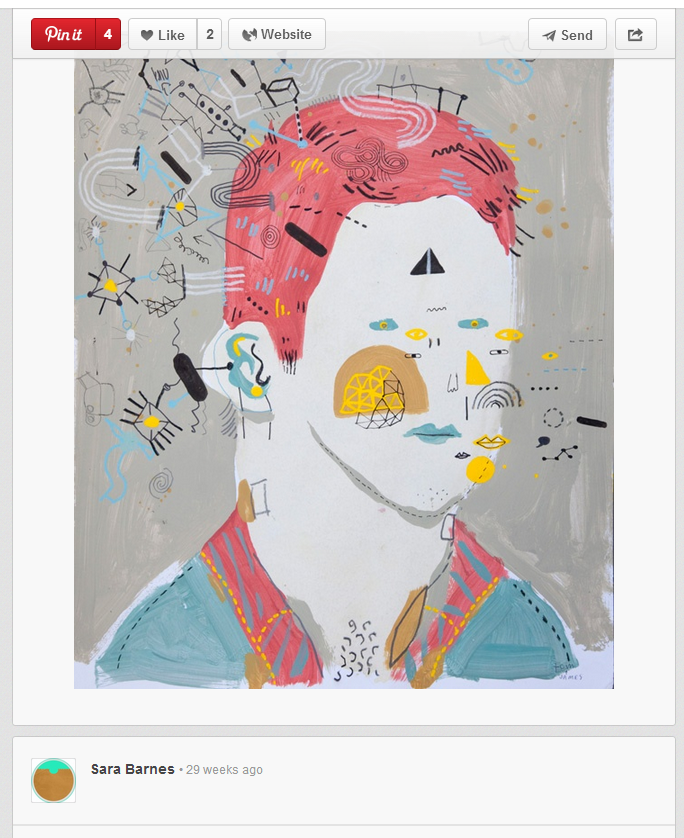
I really liked this image, but I realized that I didn’t know who did it or where it came from.
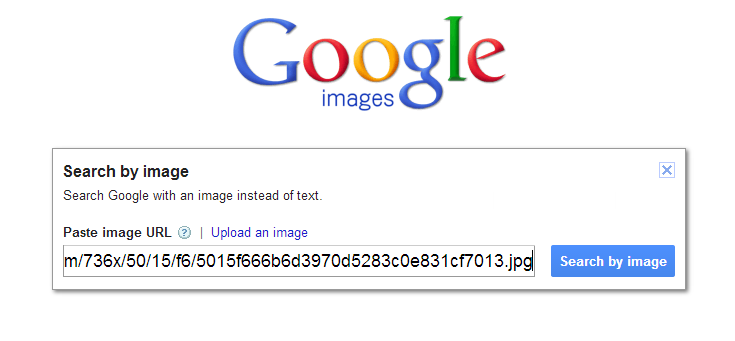
I right clicked the image and “copy image URL” and got this garbled mess. I clicked the little “camera” in the Google Image search bar and pasted the image link.
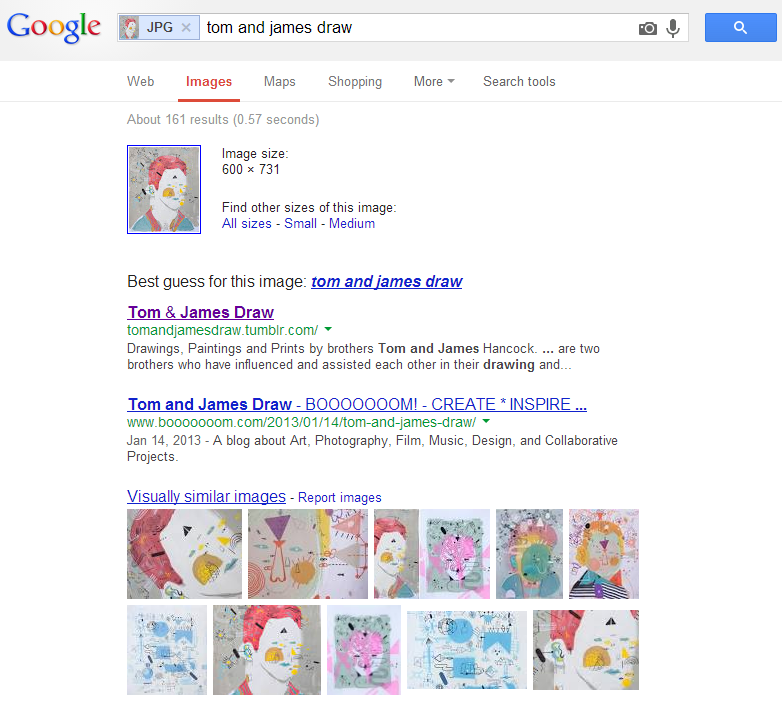
And look what came up! Easy peasy! I found out who made the image, and about this awesome project from these two brothers, Tom and James. I wouldn’t have known that if I didn’t take that extra step.
One last thing: If you are pinning something from your dashboard on Twitter, that Pin isn’t going to have the correct URL where the image actually lives. This is called a Permalink, and is the unique spot on the internet where something you find on a blog actually resides. So, when Pinning something with Pinterest, it’s best to click through a few extra times to find the blog post or Tumblr post where the image is actually living. If you pin directly from the front page of the blog or dashboard, it won’t be linked to the correct place.
That’s my little tip, and makes me feel like I am trying to do my part for artists to get their fair recognition. Because if you see something cool, why wouldn’t you want to give the person that created it credit? Knowing its origin could open doors to a whole new world.
No Comments